Checklist
Used Baby Gear Safety Checklist
Before you buy it, borrow it, or bring it home — TotCheck it. A calm, parent-friendly walkthrough for marketplace finds, hand-me-downs, and stored baby gear.
Quick answer
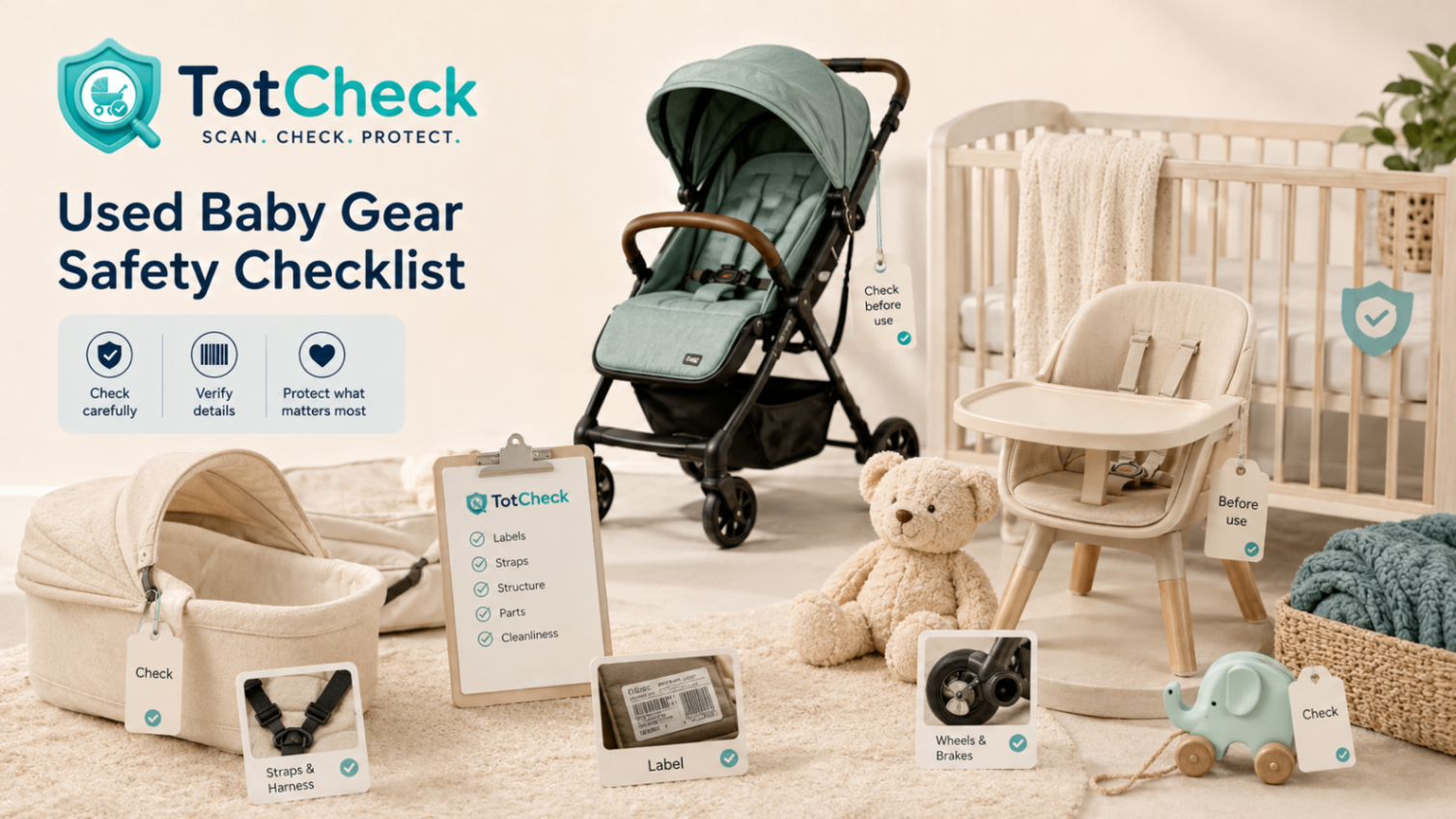
Before you buy or use secondhand baby gear, capture a clear photo of the product's white label (brand, model number, manufacture date), inspect for damage and missing parts, and check the model against CPSC for most gear or NHTSA for car seats. Walk away from items with no identifiable label, unknown crash history (car seats), or an un-remedied recall. The categories that need the most care are car seats, cribs, and anything used for sleep.
Before you buy — checklist
Run through this before money changes hands. If something can't be confirmed, it's almost always safer to pass.
- Brand, model number, and manufacture date visibleImportant
Capture: Ask the seller for a close-up of the white label.
- Model is not on an active CPSC or NHTSA recall listVerify officially
- Car seat (if applicable) has known, no-crash historyExtra caution
- Original instruction manual and all parts present
- No mold, deep stains, cracked plastic, or warped frame
- For sleep products: firm flat surface, current standardExtra caution
What to ask the seller
Questions to ask the seller
Can you send a photo of the white label on the back or bottom?
If they can't or won't, that's a red flag on its own.
Has this ever been in a car accident? (car seats)
Any moderate or severe crash compromises the seat — even if it looks fine.
Do you have the original manual and all the parts?
Replacement parts must come from the manufacturer.
Has it ever been recalled, and was the remedy installed?
Open recalls without a completed remedy mean the item is not safe to use.
How long have you had it and how was it stored?
Garage, attic, and basement storage can degrade plastics, foam, and webbing.
Is the price firm, or can I pick up and inspect first?
An in-person inspection often reveals issues photos miss.
Product-by-product checklist
What matters most varies by category. Use the group that fits the item you're considering.
Car seats
- Verified no crash historyExtra caution
- Manufacture date and expiration both confirmed
- Original harness, buckles, and instruction manual
- Not on an active NHTSA or manufacturer recall listVerify officially
Cribs and bassinets
- Not a drop-side cribExtra caution
- Meets current U.S. safety standard
Capture: Label usually includes a compliance date and standard reference.
- Slats are no more than 2-3/8 inches apart
- All original hardware, tight, no replacement parts from a hardware store
Strollers and carriers
- Folding lock engages firmly
- Harness and buckles work smoothly
- Wheel locks hold on a slope
High chairs and boosters
- Crotch strap and harness present and intact
- Tray latches firmly with no give
- Stable base, no rocking on a flat floor
Toys
- Age-grade appropriate for the child who'll use it
- No loose small parts, button batteries, or high-powered magnetsExtra caution
- Brand and item number visible for a recall check
Sleep products
- Firm, flat sleep surface onlyExtra caution
- Not an inclined sleeper, in-bed sleeper without current certification, or older positioner
- Fitted sheet only — no extra padding, blankets, or bumpers in use
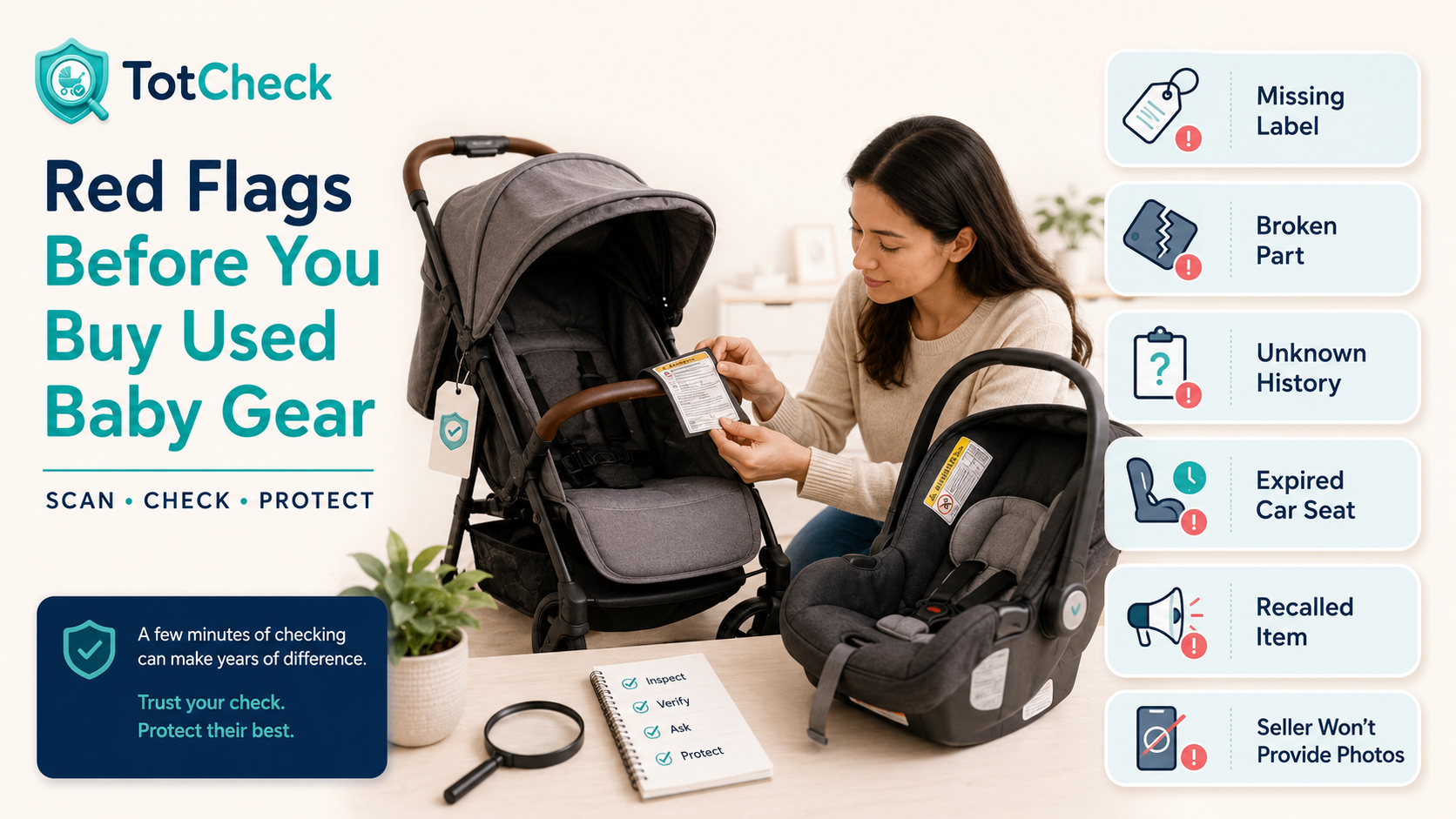
Red flags — slow down or walk away
Any one of these is reason to ask more questions. More than one usually means pass.
Red flags
- No visible label or model numberAvoid
- Seller refuses to send a label photoExtra caution
- Unknown history on a car seatAvoid
- Drop-side cribAvoid
- Inclined sleeper or older bassinet without current certificationAvoid
- Broken, missing, or hardware-store replacement partsAvoid
- Open, un-remedied recallAvoid
- Expired car seatAvoid
- Strong odor, mold, or deep staining on fabric/foamExtra caution
How TotCheck fits this checklist
Capture a screenshot of the listing, a photo of the label the seller sent, and the box UPC if you've got it. TotCheck reads the identifiers, organizes them, and helps you review possible recall matches and safety signals — so you can decide whether to buy before you message the seller again.
Verify with official sources
Confirm anything you find through the official source before buying or using.
TotCheck
Have a baby or kids product in front of you?
Capture a label, barcode, photo, or marketplace listing and let TotCheck help you review the details.
Scan before you buy or use it
Free checklist
Get the printable Used Baby Gear Checklist
Save this parent-friendly checklist before buying used baby gear, accepting hand-me-downs, or checking older items from storage.
- Know which labels, model numbers, and dates to capture
- Spot items that deserve extra caution before use
- Keep a simple safety checklist for grandparents, babysitters, and marketplace buys
Printable checklist coming soon. Use TotCheck now to capture and review your items in the meantime.
Frequently asked
Is it safe to buy used baby gear on Facebook Marketplace or from a friend?
Often yes, with care. The lower-risk categories are toys, strollers, high chairs, and most feeding gear — those are usually safe with a careful inspection and a recall check. The higher-risk categories are car seats, cribs, and anything used for sleep, because the standards are stricter and the useful lifespan is shorter. Always ask for a clear photo of the white label, run the model number through CPSC and (for car seats) NHTSA, and walk away if you can't verify the basics.
What baby gear should I never buy used?
Avoid used car seats with unknown crash history, drop-side cribs (no longer allowed in the U.S.), recalled inclined sleepers, and any sleep surface that isn't a firm, flat mattress with a fitted sheet in a current-standard crib or bassinet. Skip products with missing labels, missing parts, or recall remedies that were never installed. The cost of being wrong on these is too high.
What's the single most useful photo to ask the seller for?
A clear, well-lit photo of the white compliance label on the product. It almost always shows the brand, model number, and manufacture date — the three pieces of information needed to check most recalls, confirm expiration (for car seats), and verify the product is identifiable. If a seller can't or won't send one, treat it as a red flag.
How do I check if a used baby product has been recalled?
Search the brand and model number on CPSC.gov for most baby gear, toys, cribs, and sleep products. For car seats, use NHTSA. The manufacturer's website usually has a recall page as well. If a recall comes up, check whether the remedy (repair kit, replacement part, or refund) was completed before the item was sold. TotCheck can help organize the identifiers and review possible matches in one step.
Are hand-me-down car seats okay?
Only if you can confirm four things: the seat has never been in a moderate or severe crash, all original parts and the instruction manual are present, it isn't past its expiration date, and it isn't subject to an open recall. If any of those can't be verified, pass — even from family.
Related resources
Last reviewed for content structure: June 2026. Always verify active recalls and safety instructions through official sources.