
Car Seat Safety
Car Seat Recall Checker
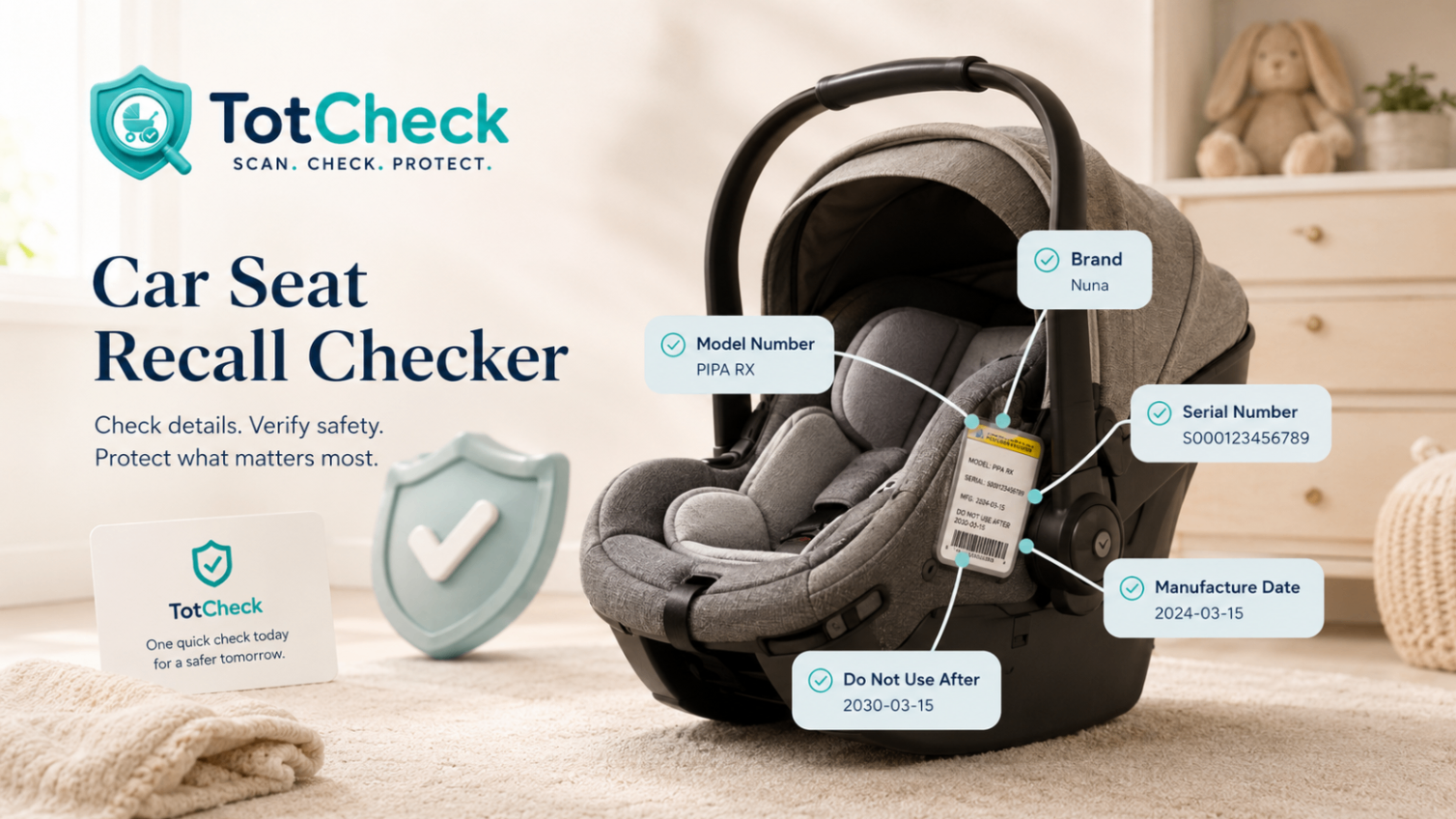
Check a car seat before you install, buy, borrow, or reuse it. Capture the label and TotCheck helps you review the brand, model, manufacture date, and possible recall matches.
Quick answer
To check a car seat recall, you usually need the brand, model name/number, manufacture date, and sometimes the serial number — all printed on the white compliance label on the back, side, or bottom of the seat or base. With those details you can search the manufacturer's recall page and the official NHTSA recall database. TotCheck helps you capture and organize these details from the label, barcode, or listing photo so you can review possible matches and verify through official sources.
What information you'll need
Recalls are matched to specific models manufactured in specific date windows. Capture as many of these as you can before you start looking.
- Brand and full product name
Capture: Top of the compliance label.
- Model numberImportant
The single most important identifier for recall lookup.
- Manufacture dateImportant
Recalls are scoped to a date window — and this is how you check expiration.
- Serial number if printed
Useful for newer recalls and for registering the seat.
- Expiration or 'do not use after' date
Often printed separately or molded into the shell.
- Registration card or instruction manual info
Confirms remedy history for previously recalled seats.
- Box or UPC, if you still have it
Where to find the label on a car seat
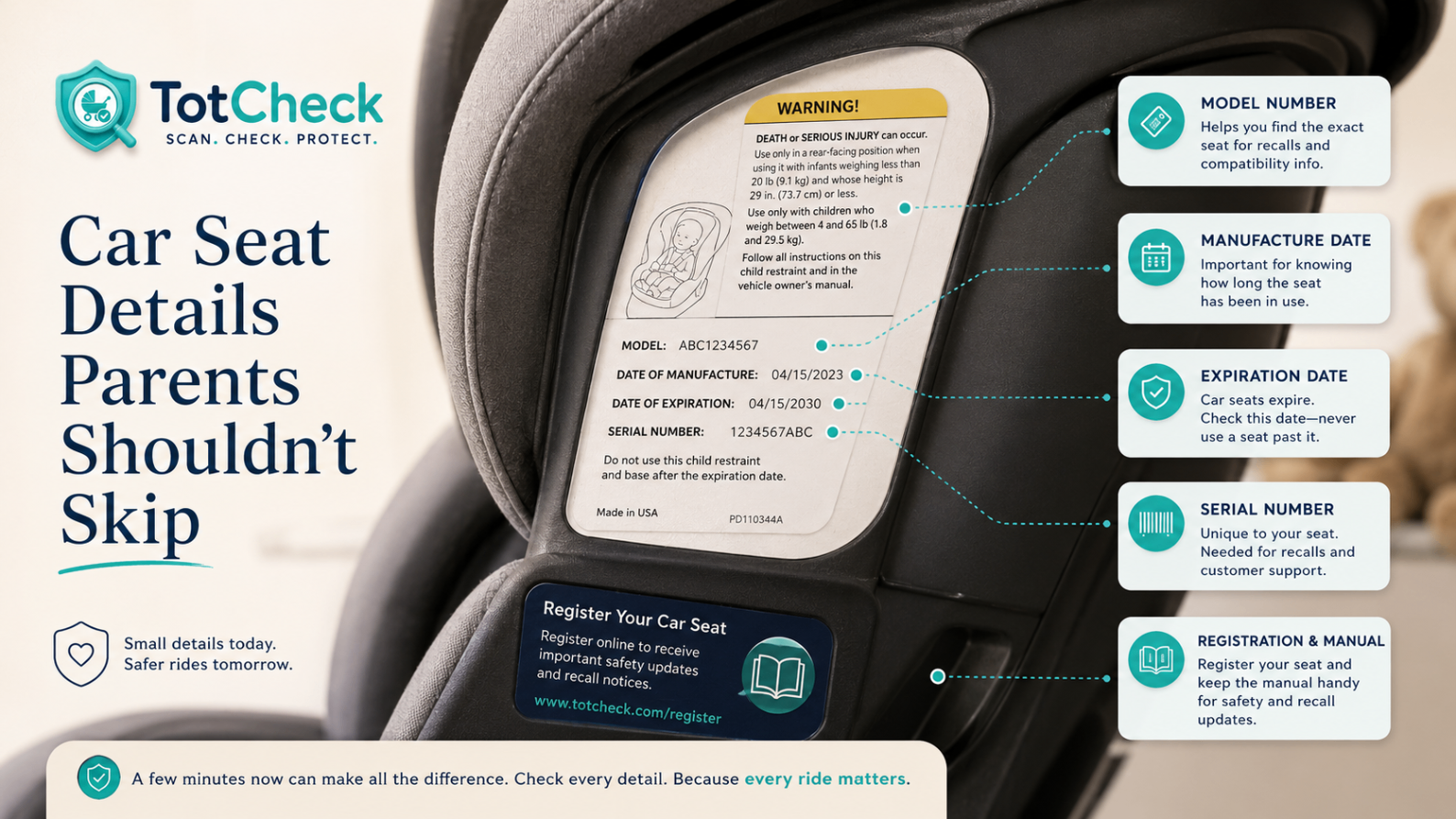
Most car seat labels live in one of three spots: the back of the shell, the side near the recline indicator, or the bottom of the base. Convertible seats often have two labels — one on the seat and one on the base. If the seat has a removable cover, the label may be tucked underneath. If you're buying or installing a seat, take the photo before installing it — once it's strapped in, the label can be hard to reach.
The car seat details parents should not skip
Model number and manufacture date do most of the recall-matching work, but expiration, serial number, and registration details matter too.
Why manufacture date matters
Manufacture date drives two of the most important checks on a car seat: recall scope (recalls almost always apply to a model produced within a specific date window) and expiration (most seats are rated for 6 to 10 years from that date). A seat with no recall but a passed expiration is still no longer safe to use — the plastic, foam, and webbing are not designed to perform in a crash beyond their service life.
Recall vs. expiration — they're not the same thing
A recall means a specific batch or model has a known safety issue, and there's almost always a free remedy from the manufacturer. An expiration is the end-of-life date for the seat itself. A seat can be expired without ever being recalled, and a recalled seat can still be within its date range. Check both, every time.
Used car seats — what deserves extra caution
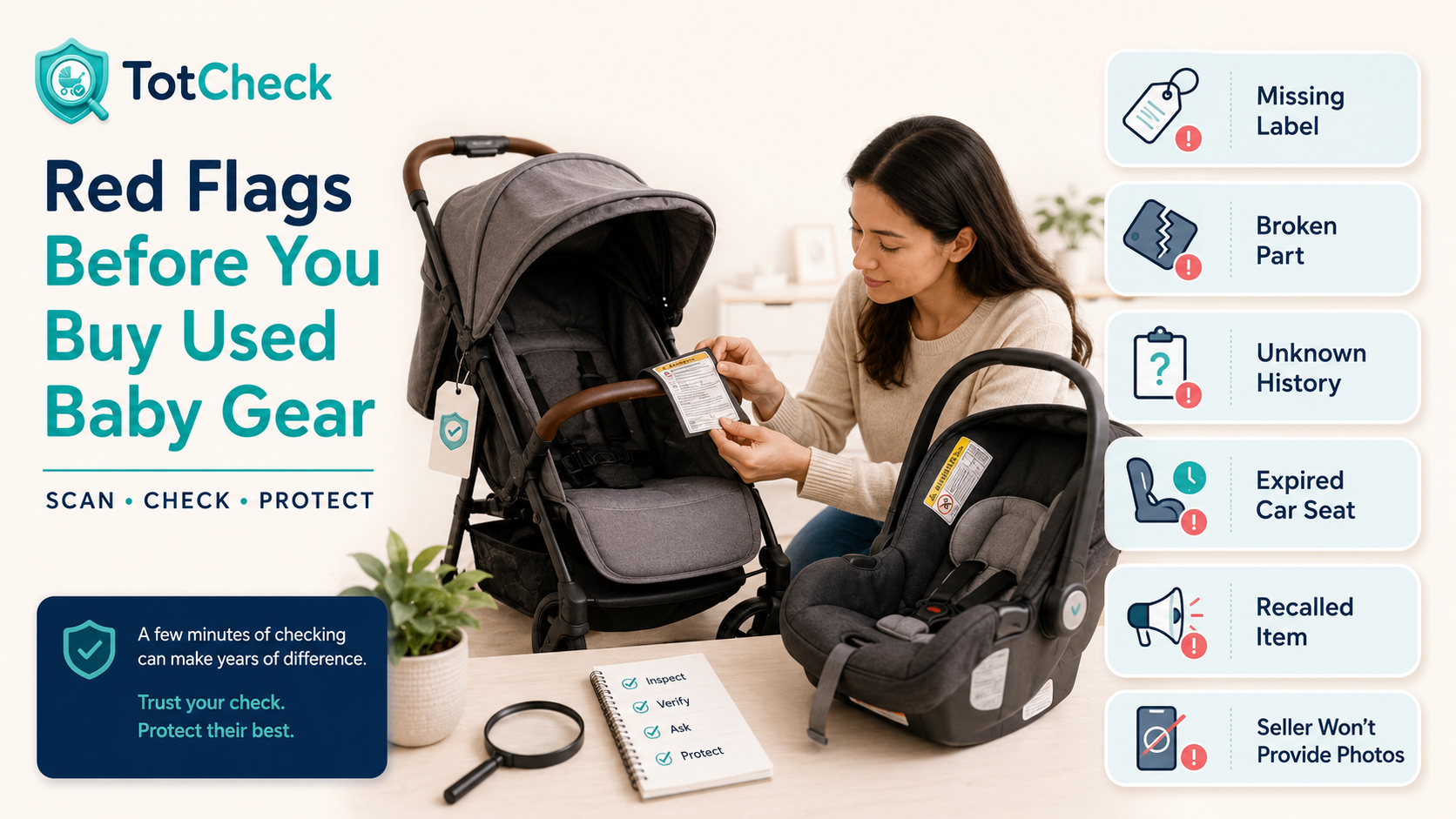
Used car seats can be fine, but the risk profile is meaningfully higher. Treat each of these as a reason to slow down.
Red flags
- Unknown crash historyAvoid
Even a moderate crash compromises the structure. If you can't verify, pass.
- Missing instruction manual or original partsExtra caution
Replacement parts must come from the manufacturer.
- Missing or unreadable compliance labelAvoid
No label = no way to verify model, date, or recall status.
- Past the expiration / do-not-use-after dateAvoid
- Open, un-remedied recallExtra caution
Confirm the remedy was installed before reusing.
What to do if a car seat may be recalled
If a possible match shows up, work through these steps in order.
- Stop using the seat while you verifyImportant
- Confirm the recall through NHTSA and the manufacturerVerify officially
Use the exact model number and manufacture date.
- Register the seat with the manufacturer if you haven't already
Registration is how you get future recall notices directly.
- Follow the official remedy
Repair kit, replacement part, or replacement seat — all are free in a recall.
- If a remedy already shipped, confirm it was installed
Hand-me-down seats may have arrived with the kit unopened.
Verify with official sources
Always confirm a car seat recall or expiration through the manufacturer and the official government source.
TotCheck
Have a baby or kids product in front of you?
Capture a label, barcode, photo, or marketplace listing and let TotCheck help you review the details.
Check a car seat nowFrequently asked
How do I check a car seat recall by model number?
Find the white compliance label on the back, side, or bottom of the seat or base. It lists the brand, model number, manufacture date, and an expiration or 'do not use after' date. With those details, search the manufacturer's recall page and the official NHTSA recall database — recalls are usually issued for specific models manufactured in a specific date window, so you need both the model number and the manufacture date for a clean check. TotCheck can pull those identifiers from a single photo of the label and review possible recall matches in one place.
Where is the car seat model number and manufacture date?
Look for the printed white label on the back of the shell, on the side near the recline indicator, or on the bottom of the base. Convertible seats often have two labels — one on the seat, one on the base. If the seat has a cover or cushion, the label may be tucked underneath. The model number, serial number, and manufacture date are usually grouped together on the same label.
Why does manufacture date matter for car seat recalls?
Recalls almost always apply to a specific model manufactured within a specific date window. Without the manufacture date, a recall search can return false positives — or miss your seat entirely. The date also tells you when the seat expires: most car seats are rated for 6 to 10 years from manufacture, after which the plastics, foam, and webbing can no longer be trusted to perform in a crash.
Recall vs. expiration — what's the difference?
A recall is an action on a specific model/batch with a known safety issue, almost always with a free remedy (repair kit, replacement, or refund). An expiration is the manufacturer's end-of-life date for the seat itself — plastic and foam degrade over time. A seat can be expired without ever being recalled, and a recalled seat can still be within its date range. Both matter.
Is it safe to use a used or hand-me-down car seat?
Sometimes, but only if you can confirm four things: it has never been in a moderate or severe crash, all original parts and the instruction manual are present, it's not past its expiration date, and it's not subject to an open recall. If any of those can't be verified, the safer choice is to pass.
What should I do if my car seat may be recalled?
Stop using the seat while you verify. Confirm the recall through NHTSA's recall database and the manufacturer's recall page using your exact model number and manufacture date. Register the seat with the manufacturer if you haven't already, then follow the official remedy instructions — most brands ship a free repair kit, replacement part, or replacement seat. If a remedy already shipped to a previous owner, confirm it was installed before reusing.
Related resources
Last reviewed for content structure: June 2026. Always verify active recalls and safety instructions through official sources.