
Audit
Grandparent's House Baby Safety Audit
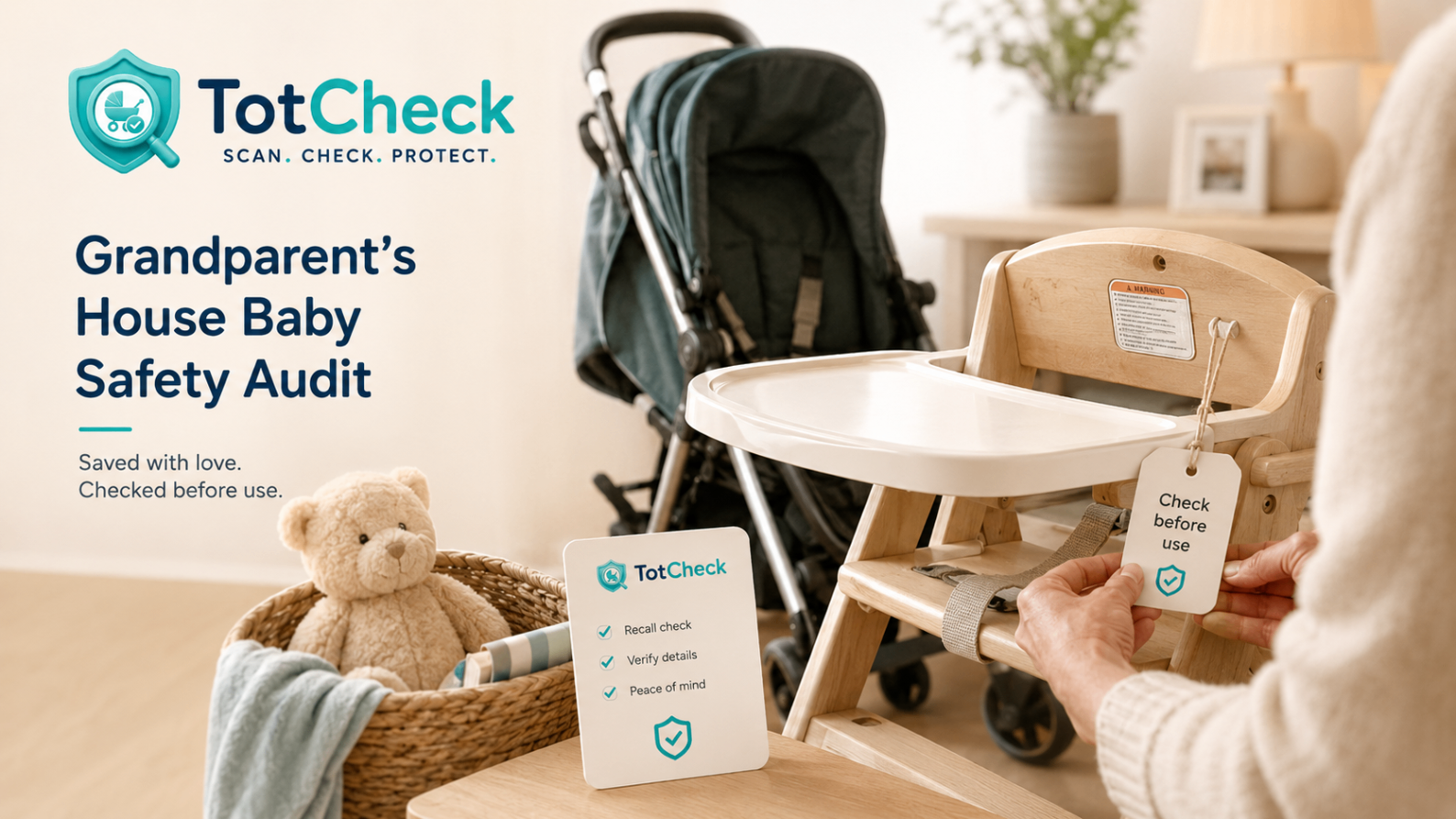
Before baby uses older gear from storage, do a quick, gentle safety audit — together. TotCheck helps you organize what's still safe to use and what to retire.
Quick answer
Before baby uses older gear at a grandparent's house, walk room by room with a phone and capture the white label, brand, model number, and manufacture date for each item — car seats, cribs, bassinets, strollers, high chairs, toys, and sleep products. Check each model against CPSC (or NHTSA for car seats), look for cracks, mold, missing parts, or warped plastic, and confirm sleep products meet current safe-sleep guidance. The two highest-priority categories are car seats and anything used for sleep.
Why older baby gear deserves a second look
Cribs, car seats, sleep products, and high chairs have all seen real safety standard changes in the last decade. Drop-side cribs, inclined sleepers, and certain bassinet designs are no longer considered safe. Plastic, foam, and harness webbing also break down quietly in attics, basements, and garages — even when nothing looks wrong from a distance.
Room-by-room audit
Walk through with your phone. A few photos per room is usually enough to flag the gear that needs a closer look.
Sleeping area
- Crib, bassinet, or pack-and-play that meets current standardsExtra caution
- No drop-side cribs, inclined sleepers, or older positionersExtra caution
- Firm flat mattress, fitted sheet only, nothing else in the sleep space
Feeding area
- High chair or booster with intact harness and tray latch
- Bottles, sippy cups, pacifiers free of cracks and not recalled
Living room and play area
- Toys age-appropriate, no loose small parts or button batteriesExtra caution
- Play yards and bouncers in working condition with intact straps
Car and travel gear
- Backup car seat checked for crash history, expiration, and recallsVerify officially
- Strollers fold and lock smoothly, wheels brake firmly
Bathroom and changing area
- Changing pad with safety strap or a flat, stable surface
- Bath seat, ring, or supports — many older designs have been recalledExtra caution
Stored gear — what to pull out and check
Anything pulled from a garage, attic, or basement gets a closer look. Heat, humidity, and time degrade materials quietly.
- Car seats
Check expiration and recall status before installing.
- Cribs, bassinets, pack-and-plays
Confirm compliance with current standards.
- Play yards
Look for missing latches or torn mesh.
- High chairs and boosters
Harness webbing and tray latches fail first.
- Strollers
Folding lock, wheel lock, and harness.
- Toys
Small parts, batteries, magnets — standards have tightened.
- Baby monitors and electronics
Older cords and batteries can be a hazard; cord placement matters.
- Feeding items, bottles, pacifiers
Cracks, worn nipples, and any recalled items.
What to photograph for each item
A few quick shots make later verification much faster.
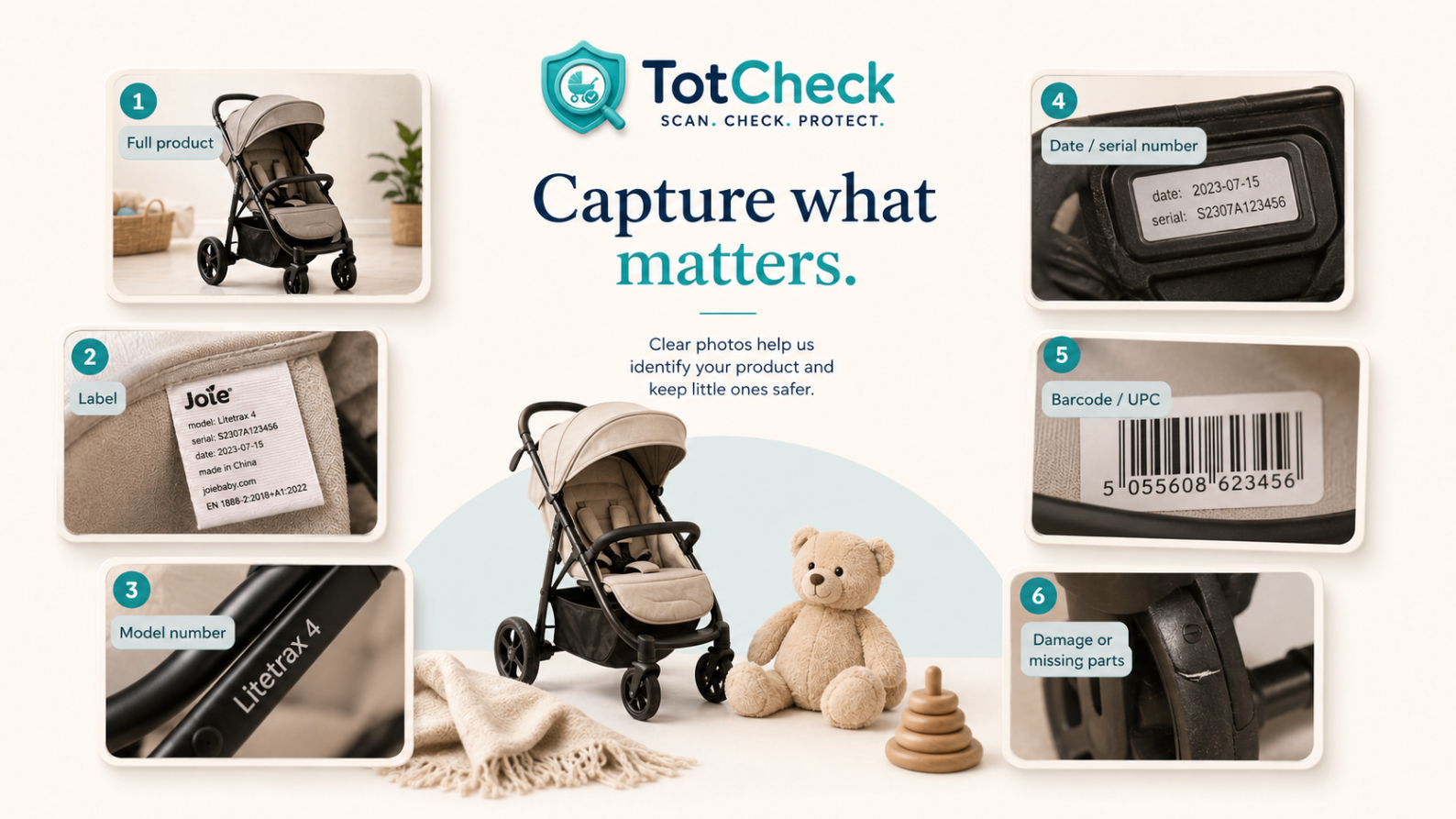
- The full product, in context
- The white compliance label, close-up
- Brand, model number, manufacture dateImportant
- Any warning labels printed on the product
- Any missing or broken parts
- Packaging or manual if it's still around
How to ask grandparents without making it awkward
Lead with care, not correction. Something like:
"We know you saved this because you care. Let's just check the labels together and make sure it still matches today's guidance before baby uses it."
Most grandparents are glad to help once they understand the standards have moved — it isn't a comment on their parenting. Frame anything you retire as updated guidance, not unsafe.
Red flags — items to retire
Red flags
- Drop-side cribAvoid
- Inclined sleeper or older positionerAvoid
- Car seat past its expiration dateAvoid
- Car seat with unknown crash historyAvoid
- Recalled item without a documented remedyAvoid
- Missing or unreadable compliance labelExtra caution
- Cracked plastic, frayed webbing, broken or loose hardwareExtra caution
- Items stored long-term in heat, humidity, or direct sunExtra caution
How TotCheck helps organize this
Walk through the house with your phone. Capture a label or photo per item, and TotCheck builds a list of what's identifiable, what's missing, and where there are possible safety signals — so you can decide together what stays and what gets retired.
Verify with official sources
Confirm any concerns through the official source before deciding to keep or retire.
TotCheck
Have a baby or kids product in front of you?
Capture a label, barcode, photo, or marketplace listing and let TotCheck help you review the details.
Scan older items before use
Free checklist
Get the printable Grandparent's House Audit
A one-page audit to walk through together — keep it on the fridge, in a drawer, or on your phone for the next visit.
- Know which labels, model numbers, and dates to capture
- Quickly spot stored gear that deserves a closer look
- Share a simple safety checklist with grandparents
Printable checklist coming soon. Use TotCheck now to capture and review your items in the meantime.
Frequently asked
What should I check before baby uses old gear at a grandparent's house?
Start with anything used for sleep (cribs, bassinets, sleepers) and car seats — those have the strictest standards and the shortest useful lifespan. Then walk through high chairs, strollers, toys, and feeding gear. For each item, look for a visible white label, capture the brand, model number, and manufacture date, check the item for cracks, mold, missing parts, or damage, and run the model through CPSC (or NHTSA for car seats) before use.
Why do older baby items need extra checking?
Safety standards for cribs, sleep products, and car seats have changed significantly over the last decade. Drop-side cribs, inclined sleepers, and certain bassinet designs are no longer considered safe in the U.S. — even items that were top-rated when grandparents first bought them. On top of that, plastics, foam, and harness webbing degrade quietly in attics, basements, and garages, especially with temperature swings and humidity.
How do I bring this up with grandparents without making it awkward?
Lead with curiosity, not inspection. Something like 'we'd love to see what you kept — can we look at the labels together?' usually lands well. Most grandparents are genuinely glad to help once they understand that the standards have changed, not that their care was wrong. Print the checklist, do the walkthrough together, and frame anything you retire as 'updated guidance,' not 'unsafe.'
What's the highest-priority item to check?
Car seats first — they affect crash safety and they expire. Sleep products second — cribs, bassinets, and any sleeper, because safe-sleep guidance has changed materially in the last 10–15 years. Everything else is important but lower stakes if it passes a careful physical check and a recall lookup.
What if there's no label or manual on an older item?
Without a label, there's no way to verify the model, manufacture date, expiration (for car seats), or recall status. For high-stakes categories — car seats, cribs, sleep products — an unidentifiable item is safer to retire than to use. For lower-stakes items like toys and feeding gear, a physical inspection plus a current-standard check is often enough.
Related resources
Last reviewed for content structure: June 2026. Always verify active recalls and safety instructions through official sources.